Galileo System: Europe’s technological sovereignty is being shaped in space
Galileo provides users with positioning, navigation, and timing services
7 reading time

Just as GPS (the global positioning system developed by the United States) once transformed how we move and connect, Galileo—developed by the European Union—has taken satellite navigation a step further.
Galileo is already part of our daily lives, improving mobile phone navigation, enhancing road safety through the eCall system in vehicles, optimising transport, supporting precision agriculture, and drastically reducing response times in search and rescue operations.
With nearly five billion compatible devices, Galileo offers users free access to a wider range of positioning, navigation, and timing services, delivering better performance than GPS, its American counterpart.
Beyond autonomy, Galileo drives innovation by fostering the development of European products and solutions based on its services.
The European Space Agency (ESA) is responsible for the design, evolution, and technical development of its infrastructure, while operational management, deployment, and maintenance are delegated to the EU Agency for the Space Programme (EUSPA).
Galileo has been designed to enable satellite navigation-based services and applications across a wide range of sectors, including transport, mobility, logistics, agriculture, defence, security, and emergency services.
What services does Galileo offer?
The first generation of Galileo (G1), operational since 2016, is fully interoperable with GPS and currently provides:
- Open Service (OS): a global, free positioning, navigation, and timing service widely used in applications such as mobile phones and vehicle navigation, offering greater accuracy than GPS’s open service.
- High Accuracy Service (HAS): a free global service delivering decimetre-level positioning accuracy for applications requiring higher performance, such as precision agriculture, mapping, or autonomous driving.
- Public Regulated Service (PRS): an encrypted, restricted-access service for authorised government users, including security forces, military bodies, emergency services, and civil protection. Designed to operate even in hostile environments or crisis situations, it guarantees secure, continuous service resistant to interference, jamming, or spoofing—reinforcing EU Member States’ strategic autonomy and operational security.
- Search and Rescue Service (SAR): detects and locates emergency signals from distress beacons and notifies users that their signal has been received, significantly reducing rescue times.
- Open Service Navigation Message Authentication (OSNMA): authenticates navigation messages for civil applications requiring greater security and reliability—a feature not available in GPS.
Future services will include:
- Signal Authentication Service (SAS): complementing OSNMA, this service authenticates range and navigation messages for sensitive civil and professional applications.
- Emergency Warning Satellite Service (EWSS): a global rapid-alert system enabling civil protection authorities to send messages directly to Galileo-compatible smartphones and devices, improving emergency response and risk management.
- Timing Service: precise time synchronisation for critical applications such as telecommunications, power grids, and financial services.
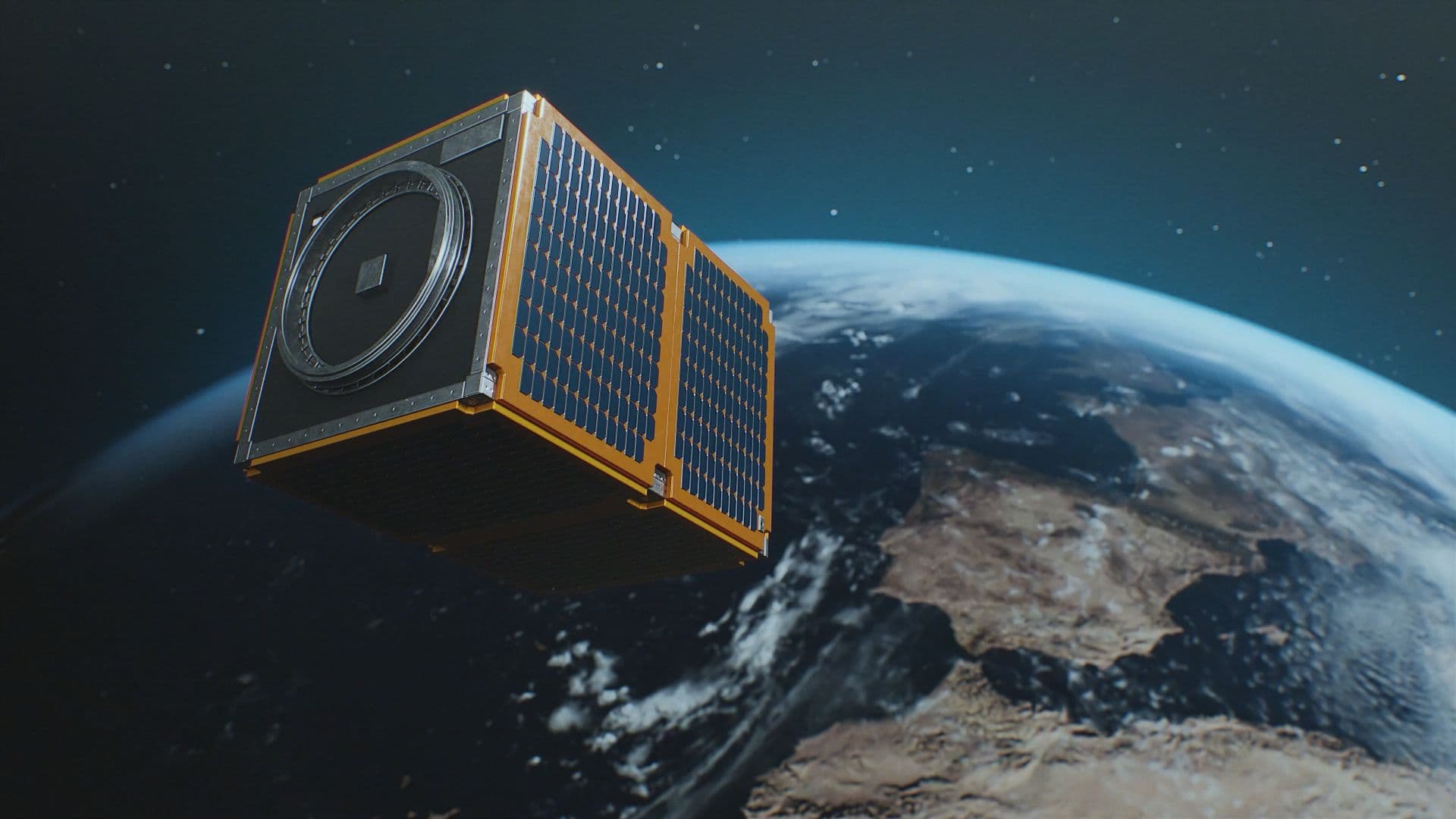
Galileo relies on a robust, distributed infrastructure comprising three segments: space, ground, and user. The space segment includes 30 satellites (24 operational plus six spares). The ground segment features Mission and Control Centres, Security Monitoring Centres, Service Centres, and Reference Stations across Europe, supported by remote stations worldwide.
Together, this infrastructure guarantees the quality, security, and continuity of Galileo services, reinforcing Europe’s strategic autonomy in space and digital domains.
ESA has already begun designing Galileo Second Generation (G2G), aimed at delivering more precise, secure, and resilient services with shorter time-to-market and advanced technologies such as digital payloads, reconfigurable antennas, and inter-satellite links. G2G will improve accuracy, reduce positioning time, and strengthen cybersecurity and resilience against attacks—further consolidating Europe’s sovereignty in satellite navigation.
Indra Space’s role in Galileo
In today’s geopolitical context, marked by growing tensions, Indra Space holds a privileged position within Galileo—a dual-use system that has become a cornerstone of Europe’s strategic and technological autonomy in a domain critical to our security, economy, and daily life: navigation.
Indra Space’s involvement in the Galileo programme began more than two decades ago with initial feasibility studies, system definition, and demonstrators, notably taking responsibility for the mission segment of the Galileo System Test Bed (GSTB v2).
Since then, Indra Space has led the design, development, and deployment of key subsystems within the mission and control segments of the current operational system (Galileo G1G) and is now driving the evolution towards the next-generation system (Galileo G2G).
All Galileo remote stations are based on Indra Space technology. As prime contractor, Indra Space manages the entire network of mission and control segment stations—sensor stations (GSS), uplink stations (ULS), and tracking, telemetry, and telecommand stations (TT&C). This network is strategically deployed worldwide, including remote locations such as Antarctica and the Arctic Circle, ensuring global coverage, precise synchronisation, and continuous monitoring.
- 15 Sensor Stations (GSS): Acquire real-time signals from satellites and transmit them to the mission centre to verify signal accuracy and quality and determine precise orbits.
- 20 Uplink Stations (ULS): send navigation data messages generated by the mission centre to satellites, which then relay them to end users.
- 7 TT&C Stations: maintain permanent contact with satellites, monitoring their position and status via telemetry and sending control commands.
Indra Space also plays a key role in the security infrastructure responsible for delivering the Public Regulated Service (PRS). It is the prime contractor for the secure platform (POCP-S 2S), which acts as the common interface for all EU Member States with Galileo for PRS management. Additionally, Indra Space leads the software for PRS key management and security modules (PKMF) and is responsible for key management software at the Galileo Security Monitoring Centre (GSMC-S).
At the Mission Centre, Indra Space leads:
- Message Generation Facility (MGF): a real-time, safety-critical system assembling navigation messages for satellites.
- Mission Support Facility (MSF): responsible for offline generation of orbits and reference clocks for the Galileo constellation.
Indra Space also develops software for the key management subsystem (MKMF), protecting uplink connections to satellites, and contributes to value-added services such as authentication.
From a user interface perspective, Indra Space co-leads the European GNSS Service Centre (E-GSC), which provides a unique interface between the Galileo system and civil users of Galileo services, including, among others, the Open Service (OS) and High Accuracy Service (HAS).
Finally, it is worth highlighting that, as with the first generation of the Galileo system, Indra Deimos has contributed to the initial studies for the new generation of Galileo (G2G), particularly in the introduction of inter-satellite links (ISL) and improvements in orbital determination. It currently provides technical support to ESA for system deployment, being responsible for mission analysis, performance analysis, and RAMS.
Regarding the G2G ground segment, Indra Space co-leads the design and development of the new PRS key management subsystem (G2G IOV KMF) and leads the navigation message generation subsystem (G2G IOV MGF).
What does Indra Space offer in the user segment?
In the user segment, Indra Space has a long-standing track record in designing and developing satellite navigation (GNSS)-based products and solutions for both governmental and private users. Building on its initial involvement in developing G1 and G2 test receivers, Indra Space now provides users with performance monitoring solutions, interference detection and mitigation, as well as high-performance receivers capable of delivering secure positioning under attack or degraded conditions.
Indra Space also develops GNSS receivers for launchers and LEO (Low Earth Orbit) satellites, including the G3Star receiver, which will demonstrate the use of Galileo HAS in space.
Among these products, Navishield stands out—a cutting-edge GNSS protection solution equipped with a next-generation CRPA antenna, ensuring the integrity of navigation signals, including Galileo PRS, Galileo OS, and GPS, against interference and spoofing, thereby guaranteeing reliable positioning.
Galileo provides Europe and its citizens autonomy and sovereignty in accessing these services, eliminating dependence on non-European systems for critical applications such as defence, aviation, maritime transport, and telecommunications.